What is Accounts Receivable Automation? A Complete Guide for Modern Businesses
Discover how accounts receivable automation helps businesses get paid faster, reduce late payments, automate invoice reminders, and improve cash flow with AI-driven workflows.
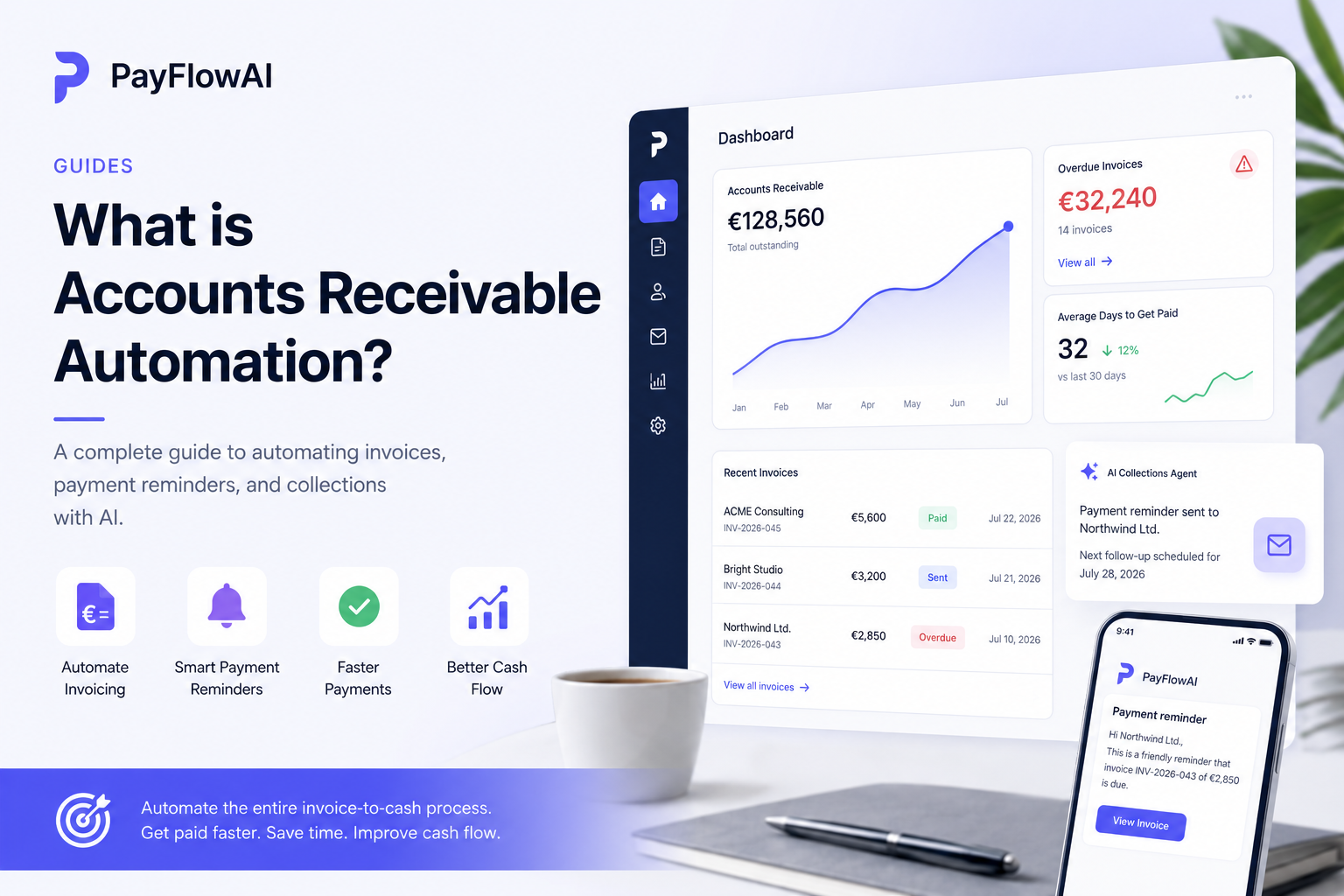
What is Accounts Receivable Automation?
For many businesses, getting paid is often more time-consuming than completing the actual work. Once an invoice has been sent, someone still needs to monitor due dates, follow up with customers, record incoming payments, and keep track of outstanding balances. As invoice volumes increase, these repetitive tasks quickly become difficult to manage manually.
Accounts receivable automation is the use of software to streamline and automate the entire invoice-to-cash process. Instead of relying on spreadsheets, calendar reminders, and manual emails, an AR automation software platform manages routine activities in the background, allowing finance teams and business owners to focus on more valuable work.
Modern AR automation software can generate invoices, automate invoice reminders, reconcile payments, monitor outstanding balances, and provide real-time visibility into cash flow. The latest generation of platforms also uses artificial intelligence to improve collections, identify overdue payment risks, and recommend the most effective follow-up strategy.
The objective isn’t simply to reduce administration. It’s to help businesses get paid faster, improve cash flow, and create a smoother payment experience for both the finance team and the customer.
What is Accounts Receivable?
Before discussing automation, it’s helpful to understand what accounts receivable actually means.
Accounts receivable (AR) is the money your customers owe your business for products or services that have already been delivered but have not yet been paid for. Every unpaid invoice represents money that should eventually become cash in your bank account.
For example, if you complete a €5,000 consulting project and give your client 30 days to pay, that invoice becomes an account receivable until payment is received.
While the concept is simple, managing dozens or even hundreds of invoices quickly becomes challenging. Businesses need to know which invoices have been sent, which are due soon, which are overdue, and which customers require follow-up. Without the right systems, these tasks consume valuable time and often result in delayed payments and reduced cash flow.
Manual vs Automated Accounts Receivable
Many freelancers and small businesses still manage their accounts receivable using familiar tools like Excel, Outlook, or accounting software that requires significant manual work. Initially, this approach feels manageable. As invoice volumes grow, however, so does the risk of missed reminders, overdue payments, and administrative errors.
A manual process often involves checking which invoices are due, searching through emails to see whether reminders have already been sent, logging into online banking to verify payments, and updating spreadsheets by hand. None of these activities are particularly difficult, but together they consume valuable hours every week.
With accounts receivable automation, those repetitive tasks happen automatically. Invoices are tracked continuously, reminders are sent at the right time, payments are recorded as they arrive, and dashboards are updated in real time. Instead of maintaining spreadsheets, businesses gain a clear overview of their receivables and expected cash flow with minimal effort.
Automation creates consistency, reduces human error, and allows businesses to grow without increasing administrative workload.
Manual Process
- Invoices created manually
- Payment reminders sent individually
- Invoices tracked in spreadsheets
- Manual payment reconciliation
- Limited visibility into cash flow
Automated Process
- Automatic invoice generation
- Automated invoice reminders
- Real-time invoice tracking
- Automatic payment reconciliation
- Live dashboards and reporting
Why Businesses Are Investing in Accounts Receivable Automation
Cash flow is the lifeblood of any business.
The biggest advantage of accounts receivable automation is time. Hours previously spent creating invoices, tracking due dates, and chasing late payments can instead be invested in serving customers, growing the business, or developing new products and services.
The financial benefits are equally significant. Businesses that follow up consistently tend to receive payments sooner, reducing outstanding receivables and improving cash flow. Better visibility into invoice status also makes forecasting more accurate, helping owners make informed financial decisions.
Automation also improves the customer experience. Instead of receiving inconsistent or forgotten reminders, customers receive professional, timely communication throughout the payment cycle. Clear invoices, convenient payment options, and predictable follow-ups make it easier for them to pay on time while strengthening trust in your business.
What Features Should You Look For?
Not every accounts receivable solution offers the same capabilities.
The best platforms combine invoice automation, payment tracking, collections automation, cash-flow reporting, and AI-driven insights into a single workflow. Rather than switching between accounting software, spreadsheets, email templates, and online banking, everything is managed from one central dashboard.
Look for software that can automatically create invoices, track payment status, send reminders before and after due dates, offer online payment options, and generate real-time reports. These capabilities reduce manual work while giving businesses greater confidence in their financial position.
The ROI of Accounts Receivable Automation
Faster payments don’t just improve cash flow, they give businesses more confidence to invest, hire, and grow without worrying about when invoices will be paid.
Many businesses initially adopt automation to save time, but the long-term return on investment extends far beyond administrative efficiency.
Businesses that automate their accounts receivable often experience faster payment cycles, lower Days Sales Outstanding (DSO), fewer overdue invoices, improved cash-flow forecasting, and higher collection rates. Finance teams also spend less time on repetitive administrative tasks, allowing them to focus on higher-value work.
Even recovering just a handful of overdue invoices each month can easily justify the investment in accounts receivable automation software.
Why AI Changes Everything
Traditional automation follows predefined rules. Artificial intelligence goes a step further by learning from customer behaviour and continuously improving collection strategies.
One of the biggest advantages of modern AI is its ability to generate AI invoice reminders that are personalised for each customer. Rather than sending the same generic email every time, AI can adjust the tone, timing, and wording based on payment history, increasing the likelihood of faster payment while maintaining positive customer relationships.
AI can also identify customers who are likely to pay late, recommend the best time to send reminders, detect unusual payment patterns, prioritise overdue invoices, and improve cash-flow forecasting.
Rather than replacing finance professionals, AI acts as an intelligent assistant that handles repetitive work while allowing people to focus on customer relationships and strategic decision-making.
The future of accounts receivable isn’t simply automated it’s increasingly autonomous.
How PayFlowAI Automates Accounts Receivable
PayFlowAI is an AI-native accounts receivable platform built specifically for freelancers and small businesses that want to spend less time chasing invoices and more time growing their business.
From creating professional invoices to tracking payments, monitoring cash flow, and automatically sending payment reminders, PayFlowAI brings the entire accounts receivable process into one modern platform.
With intelligent invoice tracking, automated reminder workflows, AI-driven collections, and real-time reporting, businesses always know who owes them money, which invoices require attention, and when cash is expected to arrive.
Instead of relying on spreadsheets and manual follow-ups, PayFlowAI automates the repetitive work behind the scenes, allowing business owners to focus on serving customers rather than chasing payments.
The result is faster payments, healthier cash flow, and significantly less administrative effort.
Frequently Asked Questions
What is accounts receivable automation?
Accounts receivable automation is software that automates invoice creation, payment tracking, reminders, collections, and reporting to help businesses get paid faster while reducing manual administrative work.
Is accounts receivable automation suitable for small businesses?
Yes. Modern cloud-based solutions make accounts receivable automation affordable for freelancers, startups, agencies, and small businesses not just large enterprises.
Does accounts receivable automation replace accounting software?
No. It complements your accounting software by improving the invoice-to-cash process and automating payment reminders, collections, and invoice tracking.
How does AI improve accounts receivable?
AI improves accounts receivable by predicting late payments, generating AI invoice reminders, automating collections, identifying payment risks, and improving cash-flow forecasting.
Final Thoughts
Late payments remain one of the biggest obstacles to healthy cash flow for businesses of every size.
Accounts receivable automation replaces repetitive manual work with intelligent workflows that help businesses improve efficiency, reduce overdue invoices, strengthen customer relationships, and gain complete visibility into their finances.
As artificial intelligence becomes increasingly integrated into finance operations, businesses that adopt AI-driven automation today will be better positioned to scale without increasing administrative burden.
If you’re ready to stop chasing invoices and start getting paid faster, PayFlowAI provides an AI-native accounts receivable platform designed to simplify every stage of the invoice-to-cash process.
Ready to see PayFlowAI in action? Start your free trial today and discover how AI can help you automate invoice reminders, streamline collections, improve cash flow, and spend less time chasing payments.